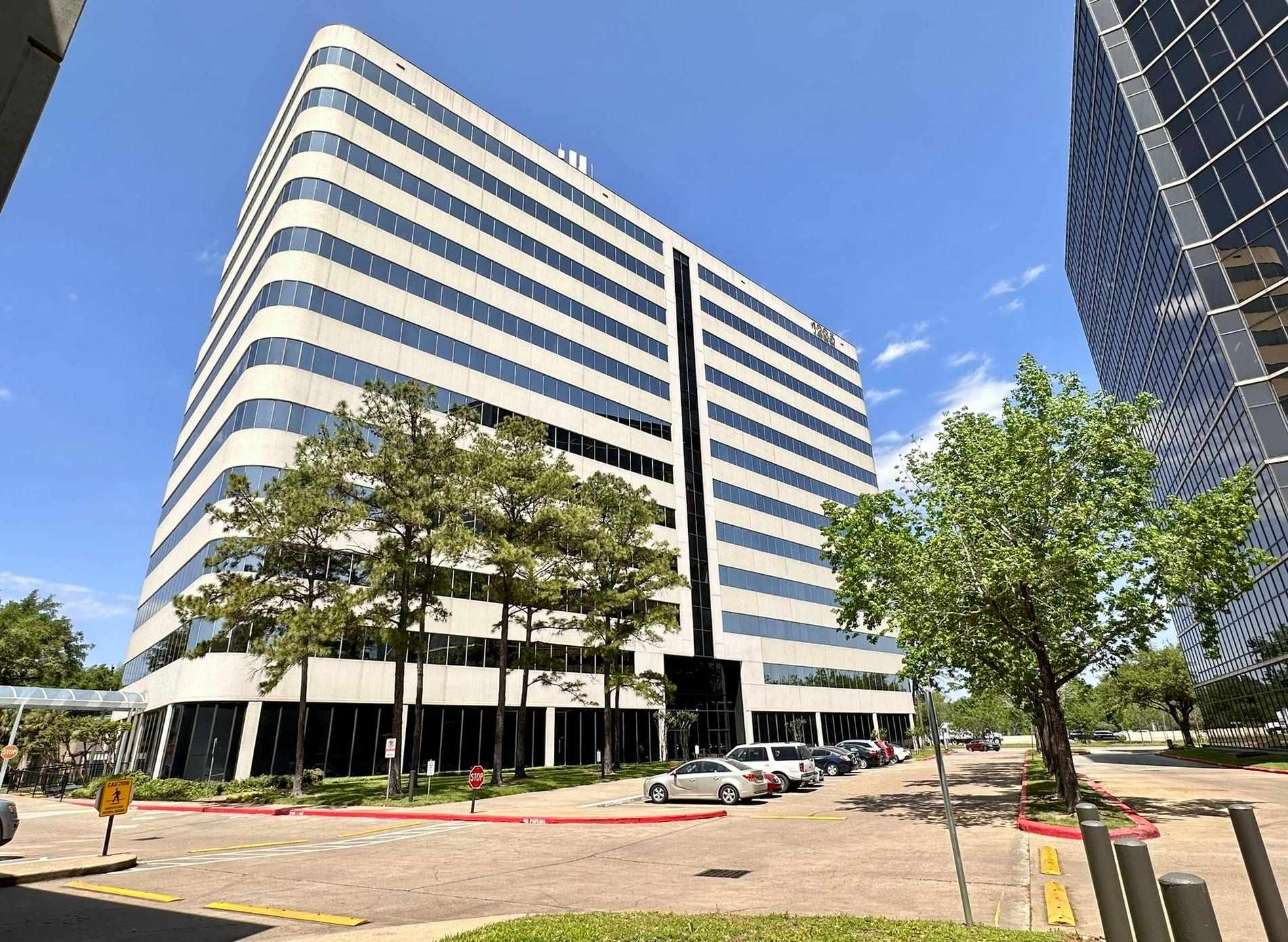
West Houston service area

Insurance for the Energy Corridor and 77079

The flood map is usually the first thing a lender checks on a house in 77079, and for most of the Energy Corridor it returns the comfortable answer: not a high-risk zone, no flood policy required. FEMA's own claim records for this ZIP code tell a different story — 3,381 flood claims, $430 million paid, and 83.8% of those claims rated outside the high-risk zone. Nowhere else in Harris County is the distance between the label and the loss this wide.

4.3/5 · 405 reviews on the official Allstate profile — checked Aug 24, 2026 EN/ES bilingual service West Houston served from the Houston office
Call the office Talk it through Use the phone when you want a real answer on a Energy Corridor address, a commute change, or a renewal that jumped. Send details Text the documents Use text for policy pages, floodplain letters, deadlines, addresses, or lender requirements. Verify office Google profile Open directions and listing details for the Houston office before visiting. Official profile Allstate agency page Check phone, address, language, and agency information.
What to know

Do I need flood insurance in the Energy Corridor if my lender doesn't require it?

Updated August 24, 2026

Not requiring it and not needing it are two different things. A lender only requires flood coverage inside a high-risk zone, and most of 77079 is mapped outside one — yet FEMA's flood-claim records for this ZIP code show 83.8% of claims, and about $361.6 million of the $430.0 million paid, came from properties rated outside that zone. Flood is always a separate policy from homeowners. Whether you buy it here is a judgment call, not a paperwork requirement.

A ZIP code where the flood map and the claim history say opposite things.

Why this comes up

What people here are usually trying to settle

Most searches from 77079 are not shopping — they are checking. Someone is under contract and the survey mentions a reservoir. Someone rebuilt after Harvey and wants to know whether the flood policy bought during the panic still fits the house. Someone dropped flood coverage when the lender stopped asking and is now having second thoughts. The underlying question is the same: how much of this risk am I carrying myself?

Under contract

The survey says reservoir

Title work and surveys in 77079 often reference a reservoir easement or a flood-pool boundary, and that language tends to arrive late in a closing. It is worth knowing before funding whether the property sits inside a pool, downstream of a gate, or neither — the three situations behave differently in a storm.

Rebuilt

The house came back after 2017

A rebuilt house is not the house that flooded. New cabinetry, new flooring, sometimes raised mechanicals and a different slab elevation — the dwelling limit and the flood building limit both need to reflect that work, and so does the contents figure, which is where post-Harvey policies most often fall short.

Never flooded

Twenty years dry, still deciding

Plenty of 77079 homes have never taken an inch. That was also true of thousands of the addresses that filed in 2017. The question is not whether it has happened to you but what a single event would take out of your own pocket, and whether that is a number you can absorb.

Relocating

A corporate move into a rental

The energy campuses along I-10 move people in on short notice, often into a leased house or a high-rise apartment. A landlord's policy covers the structure and nothing of yours. Renters coverage and a contents-only flood policy are separate decisions, and both are worth settling before the lease starts.

Local detail

Two reservoirs, one bayou, and a map that disagrees with the record

Two federal flood-control reservoirs define this ZIP code. Addicks sits north of I-10, Barker sits south, and both are dry ground most of the year — parkland, ballfields, hike-and-bike trail — until a storm fills them. Buffalo Bayou leaves the Barker outlet and runs east through Terry Hershey Park, the green seam between Memorial Drive and Briar Forest. During Harvey in 2017 the Army Corps of Engineers released water from both reservoirs, and houses took water on two fronts: upstream, inside the pools behind the dams, and downstream, along the bayou. Many of those addresses had never flooded before, and most sat outside the high-risk zone on the map. FEMA's records for 77079 count 1,756 claims in the Harvey year alone, on top of 467 in 2009, 167 in 2016 and 161 in 1992. The median paid claim across the full record is $82,476.

Neighborhoods and corridors

Where Energy Corridor insurance questions come from.

Nottingham Forest

North of Memorial Drive near Dairy Ashford, close enough to the Addicks side that 2017 still comes up in conversation. Mostly 1960s and 1970s construction on generous lots, which means older roofs, original slabs, and dwelling limits that have quietly fallen behind what rebuilding actually takes.

Wilchester

A long-established Spring Branch ISD neighborhood off Memorial Drive west of Wilcrest. The streets are mature and much of the drainage is original to the build, so the questions here tend to be about water coming up from the street rather than down from the sky.

Fleetwood

Between Memorial Drive and the bayou near Kirkwood, with the Barker release path to the south. Homes here sit in the part of 77079 where the map label and the 2017 water line did not agree, which is exactly the gap the claim data describes.

The Terry Hershey Park corridor

Streets backing onto the greenbelt between Memorial Drive and Briar Forest sit closest to Buffalo Bayou itself. The park is a floodway by design — a benefit most days of the year, and a very specific exposure on the days it is doing its job.

What to review

What gets read line by line on an Energy Corridor policy

  • Whether a separate flood policy exists at all, and what its building and contents limits are — contents is the piece most households here skipped when nobody was requiring the coverage.
  • Any elevation certificate on file for the property, since it changes what a flood rating conversation can even look like.
  • How the homeowners deductible is written — a percentage of the dwelling limit or a flat amount — and whether named-storm and wind/hail carry separate deductibles.
  • Ordinance-or-law coverage, which is what pays to bring a 1970s slab home up to current code after a substantial loss rather than back to how it was.
  • Whether the 2016 and 2017 claim history on the address is recorded accurately, because a CLUE report follows the property, not the owner who filed.
Prepare

Before the Corps opens the gates again

  • Know whether your street sits inside the reservoir pool behind Barker or Addicks or downstream of the gates along Buffalo Bayou — the two positions flood on completely different schedules.
  • Photograph the interior once a year, cabinet by cabinet and closet by closet, and keep the file somewhere other than the house.
  • Treat the 30-day flood waiting period as a hard calendar fact; coverage bought when a system is already named will not be in force for that storm.
  • Move the survey, the plat, any elevation data and the declarations pages to cloud storage instead of a filing cabinet on the first floor.
  • If you leave a vehicle at an office campus along I-10 during a storm, remember a flooded car is a comprehensive auto claim and has nothing to do with the homeowners policy.
Energy Corridor insurance reviews

Local insurance topics Energy Corridor households often sort out.

These are educational starting points. Policy terms, pricing, availability, and eligibility depend on the selected coverage, customer details, and underwriting.

02

Flood — a separate policy

Written on its own contract, through the NFIP or a private carrier, with its own building limit, its own contents limit and typically a 30-day wait before it takes effect. In 77079 this is the coverage most often missing, because the map said it was optional.

03

Auto

A flooded vehicle is a comprehensive claim, and comprehensive is the part drivers most often decline on an older car. Commuting the Katy Freeway also means dense, high-speed traffic exposure, which is a liability-limit conversation more than a physical-damage one.

04

Renters and condo

The corridor holds a lot of leased houses, townhomes and apartments tied to project work. Renters and condo forms cover your contents and your liability, not the building. Flood contents coverage can be written without owning anything, which surprises most tenants who ask about it.

Prepared call

Start the Energy Corridor call in the right place.

A Energy Corridor review goes faster when the office knows the address, the document that started the search, and the decision you are trying to make. That keeps the conversation on your situation instead of a generic intake form.

01

Name the trigger

Whether a separate flood policy exists at all, and what its building and contents limits are — contents is the piece most households here skipped when nobody was requiring the coverage.

02

Bring the document that started it

Know whether your street sits inside the reservoir pool behind Barker or Addicks or downstream of the gates along Buffalo Bayou — the two positions flood on completely different schedules.

03

Ask the coverage question

Any elevation certificate on file for the property, since it changes what a flood rating conversation can even look like.

Energy Corridor questions

Common questions about insurance in Energy Corridor.

Is my house inside the Barker or Addicks flood pool?

That depends on the specific address, and it is worth confirming rather than assuming. The reservoir pools extend beyond the federal property lines onto private streets in parts of 77079, and that boundary is not the same line as the FEMA high-risk zone. Bring the survey or the plat when you call and we can walk through what the documents actually say.

My homeowners policy paid for the roof after a storm. Wouldn't it cover flooding too?

No. Homeowners and flood are two separate contracts, and standard homeowners forms exclude rising surface water — reservoir release, bayou overflow, street flooding, storm surge. The roof claim you remember was a wind or hail loss, which is a listed peril. Water that comes in at the door is not, unless a separate flood policy is in force.

Do you have an office in the Energy Corridor?

No — the Energy Corridor is a service area, not a branch. Everything runs out of the Houston office at 1235 North Loop W, Ste 1010, Houston, TX 77008, and most of a policy review happens by phone, text or email anyway. Call or text (832) 271-8329 and you are talking with Ricardo Barcelo, Insurance Consultant, in English or Spanish.

If most claims here came from outside the high-risk zone, is the map wrong?

The map answers a narrower question than most people assume. It estimates the chance of water from mapped sources in a given year; it is not a forecast of what a reservoir operation or a record rainfall will do. FEMA's records for 77079 show 83.8% of claims rated outside the high-risk zone, which says the losses landed where coverage was not required — not that the map itself was defective.

How long does flood coverage take to start?

Standard NFIP policies carry a 30-day waiting period, with narrow exceptions such as coverage purchased in connection with a loan closing. Private flood carriers set their own waiting periods. Either way, the practical rule in this ZIP code is that you cannot buy it once a system is in the Gulf — the decision has to be made in a dry month.

Flood claim record · 77079

What FEMA has actually paid in Energy Corridor.

Aggregated from every National Flood Insurance Program claim FEMA has recorded in this ZIP code. Flood is always a separate policy from homeowners or renters coverage.

$430.0M paid across 2,896 paid claims
$82,476 median paid claim — half paid less than this
83.8% of claims were rated outside the high-risk flood zone
2017 · 2009 · 2016 the loss years with the most claims on record

Source: FEMA OpenFEMA, NFIP Claims v3, retrieved August 24, 2026. This product uses the Federal Emergency Management Agency’s OpenFEMA API but is not endorsed by FEMA. See the county-wide ZIP breakdown.

Contact

Talk with Ricardo Barcelo about your Energy Corridor address.

Energy Corridor households are served from the Houston office at 1235 North Loop W, Ste 1010, Houston, TX 77008. Call or text with the question you are trying to solve, then gather anything needed for a quote or licensed coverage review.

Main action

Start your Energy Corridor coverage review.

Use this page to prepare, then call the Houston office with the address, the document that started the search, and the question you want answered. Text floodplain letters, declarations pages, or deadlines when Ricardo needs the exact wording.

Clear expectations

Important coverage notes.

Energy Corridor is a service area reviewed from the Houston office. This page is educational and prepares the conversation. It does not replace a policy, quote, or licensed coverage review.

Product names and availability may vary by company and underwriting requirements.

Coverage is based on selections made and is subject to terms, conditions, availability, and qualifications.

Text messaging frequency may vary. Message and data rates may apply. Consent to receive texts is not a condition of purchase.

Call Text Reviews